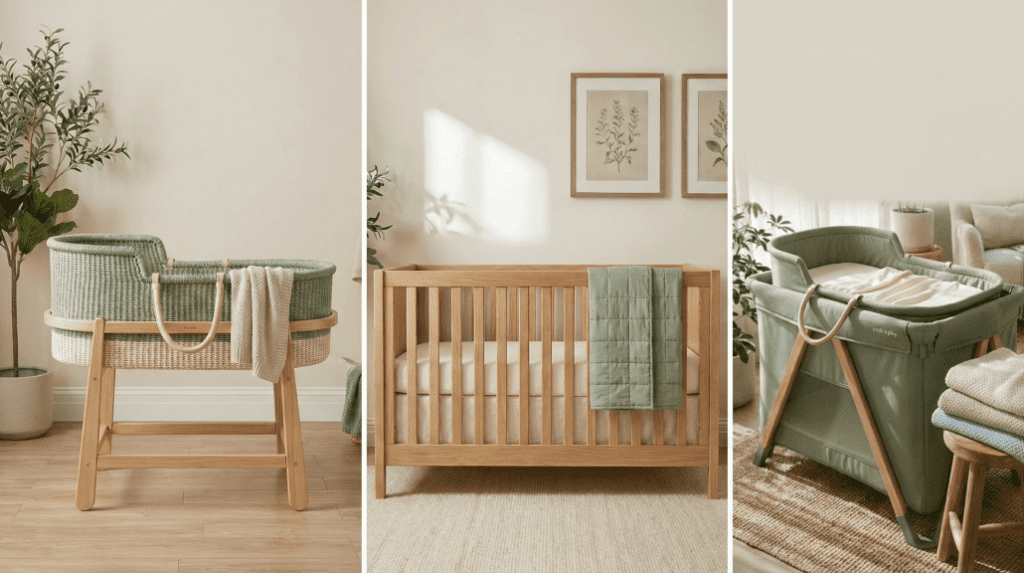
Struggling to decide between a Bassinet vs Crib vs Pack n Play for your new baby’s sleep setup? You aren’t alone. Let’s be honest: creating a baby registry feels a bit like preparing for an apocalyptic event, except the survival gear comes in pastel colors and costs a fortune.
You’re looking at your empty guest room (or the corner of your master bedroom) and wondering how a human the size of a loaf of sourdough bread supposedly requires 4,000 square feet of plastic furniture.
The “Baby Registry Overwhelm” is real. I’ve been there—staring at a $400 bassinet at 3 AM, weeping into a bowl of pickles because I didn’t know if it matched the nursery vibe I hadn’t even created yet.
Here is my promise to you: You do not need everything. You definitely don’t need to mortgage your house for a place for your baby to sleep. Whether you’re squeezing a nursery into a closet-sized apartment, planning to travel the world with a newborn (brave soul!), or just trying to save a buck, I’m going to cut through the marketing fluff and tell you exactly what you need.
Let’s break down the Great Sleep Debate so you can make a decision and get back to more important things—like napping.
The Contenders: A Quick Breakdown
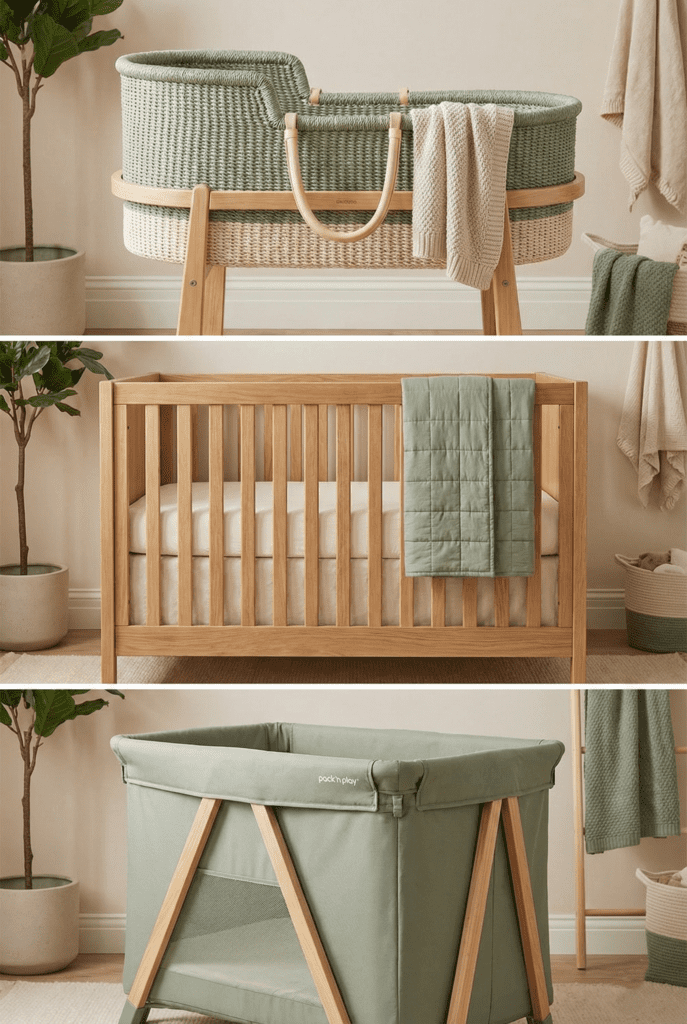
Before we dive into the pros and cons, let’s make sure we are all speaking the same language.
- The Bassinet: A small, portable sleep space designed specifically for newborns (usually up to 4-5 months).
- The Crib: The classic, sturdy, barred bed that is the centerpiece of a traditional nursery and lasts into toddlerhood.
- The Pack ‘n Play (Playard): A mesh-sided, foldable, portable unit that can act as a crib, changing station, and safe play jail (I mean… area) all in one.
The Bassinet: The Cozy Bedside Companion
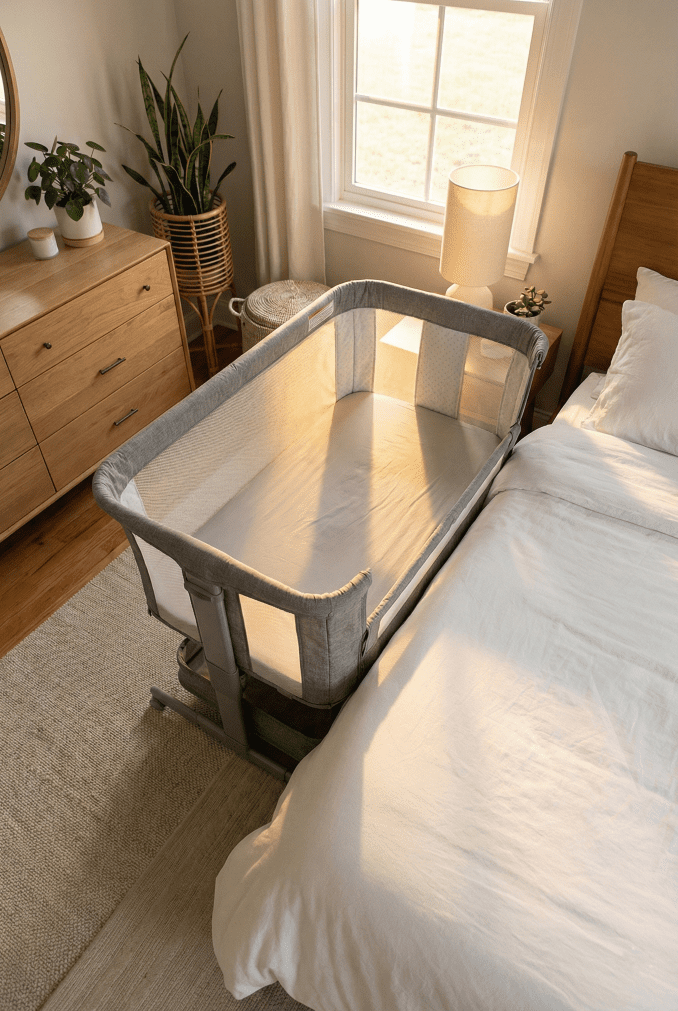
Think of the bassinet as the “newborn specialist.” It is designed to be right next to your bed, making it the MVP of the fourth trimester.
Pros:
- Small Footprint: Perfect for newborn sleeping arrangements in a small space. It tucks right next to your bed without requiring you to rearrange the whole room.
- Night Feed Accessibility: When the baby cries at 2 AM (and 4 AM, and 6 AM…), you can just reach over and scoop them up.
- Portability: Many have wheels or are light enough to drag into the living room for daytime naps.
Cons:
- Short Lifespan: This is the heartbreaker. Your baby will outgrow this in 3 to 5 months, or whenever they start rolling over.
- Extra Cost: It’s an item you buy for a very short season of life.
Best For:
- Moms recovering from a C-section (bending over a deep crib is tough on an incision).
- Breastfeeding moms who want the baby within arm’s reach.
- Parents with small bedrooms.
New Mamaa Recommended Best Bassinet : HALO BassiNest Swivel Sleeper 3.0
Emily’s Tip: If you’ve decided that having your baby right next to your bed is the way to go (and honestly, it saved my sanity for those 2 AM feeds), you need to make sure you pick a safe one. I’ve done the heavy lifting for you in my [Bassinet Buying Guide (2026): The Safest Options for Newborn Sleep], where I break down the top safety picks.
The Crib: The Long-Term Investment
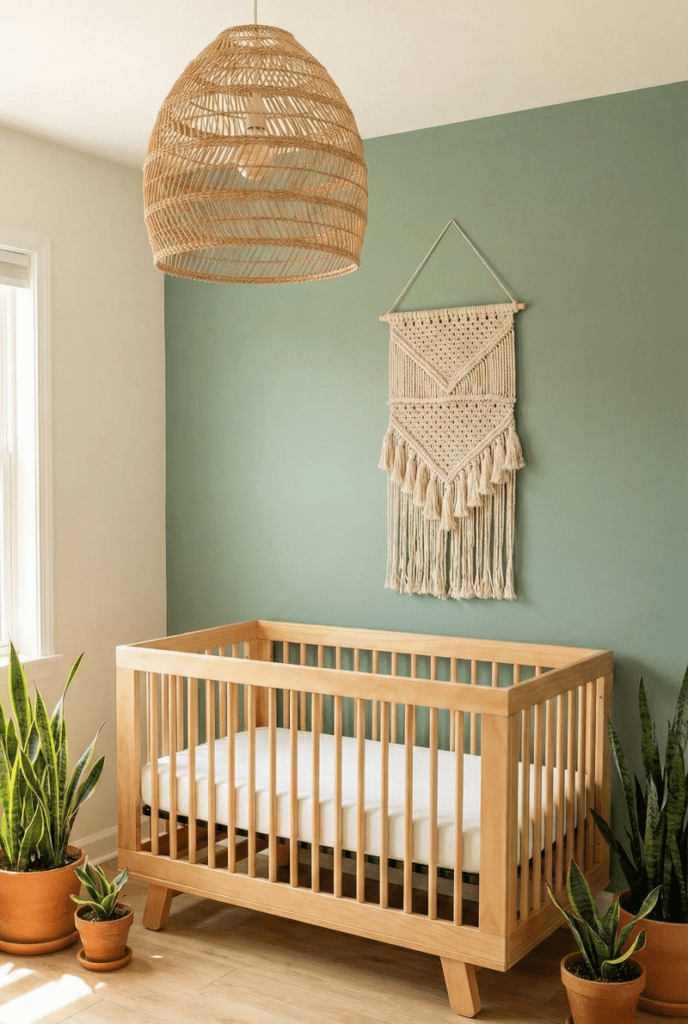
The crib is the tank of the nursery world. It’s not going anywhere, and neither is your baby—hopefully.
Pros:
- Longevity: A convertible crib can last from day one until your child is 3 or 4 years old (converting into a toddler bed).
- Durability: These are built to withstand a toddler jumping on them (eventually).
- Safety: It is generally considered the safest sleep environment because it has a firm mattress and sturdy sides.
Cons:
- Immobile: Once you build it, it lives there. You aren’t dragging a crib into the kitchen while you cook.
- Huge Footprint: It takes up a lot of space.
- The “Reach” Factor: For short moms or those recovering from birth, lowering a sleeping newborn all the way down to the mattress can feel like a high-stakes game of Operation.
Best For:
- Parents with a dedicated nursery.
- The “One and Done” shopper who doesn’t want to buy multiple beds.
- Parents who value aesthetics and want that “finished nursery” look.
New Mamaa Recommended Best Crib : Graco Benton 5-in-1 Convertible Crib
[Also Read]: The 10 Best Non-Toxic & Greenguard Gold Certified Cribs for Eco-Conscious Moms.
Planning Your Dream Nursery? If you are ready to make the investment in a piece of furniture that will last for years, you need to know which ones are actually built to last (and which ones are just pretty). Check out [The Ultimate Crib Buying Guide: How to Choose the Safe, Perfect Crib for Your Nursery (2026 Edition)] before you buy.
The Pack ‘n Play (Playard): The Swiss Army Knife
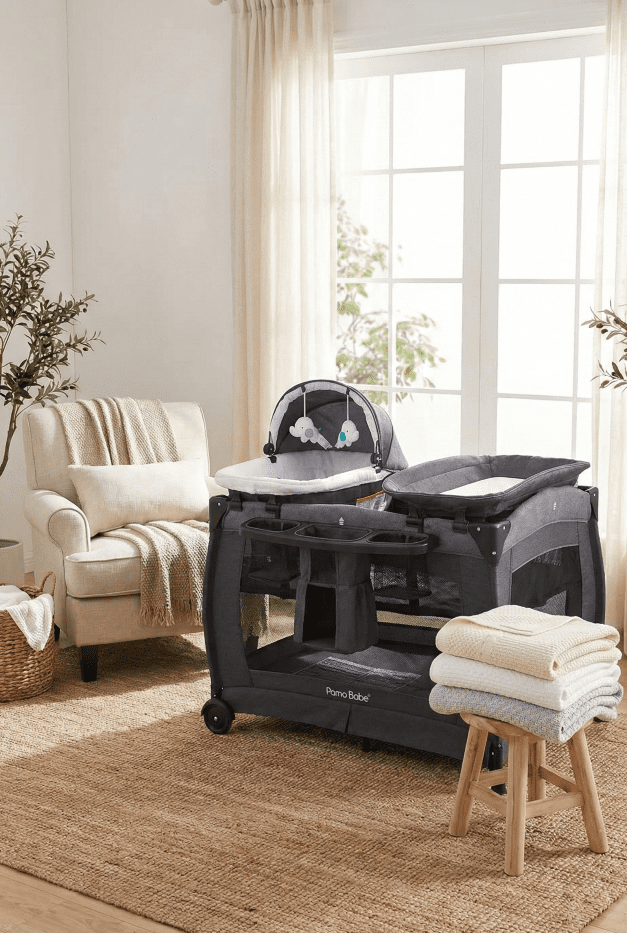
If the crib is a tank, the Pack ‘n Play is a transformer. It’s a bed, a changing table, and a travel cot all rolled into one mesh rectangle.
Pros:
- Portability: Fold it up, shove it in a bag, throw it in the trunk. It’s the king of travel.
- Multi-use: Great for sleep now, great for containing a crawling chaos-monster later.
- Affordable: You can get a safe place to sleep for a fraction of the cost of a crib + mattress.
Cons:
- The Mattress: Let’s be real—the “mattress” is essentially a cardboard square wrapped in fabric. It is safe, but it doesn’t look comfy (though babies rarely mind).
- Low Profile: The standard floor level is very low, which is hard on your back. However, many models come with a “bassinet insert” that raises the floor for newborns.
Best For:
- Pack n play for newborn sleeping is ideal for families on a tight budget.
- Travel lovers or those visiting Grandma often.
- People living in very small apartments who need to pack the bed away during the day.
New Mamaa Recommended Best Pick ‘n Play: Pamo Babe Portable Playpen Foldable Playard
Comparison Table: At a Glance
Still scratching your head? Here is the Bassinet vs. Crib pros and cons breakdown (featuring our friend the Pack ‘n Play).
| Feature | Bassinet | Crib | Pack ‘n Play |
| Price | $$(Moderate) | $$$ (High) | $ (Low) |
| Lifespan | 0–5 Months | 0–4 Years | 0–3 Years |
| Portability | High (Room to room) | None (Stays put) | High (Travel ready) |
| Footprint | Small | Large | Medium |
| Best Asset | Convenience for night feeds | Long-term value & aesthetics | Versatility & Travel |
The Verdict: Which One Should You Buy First?
There is no single right answer, but there is a right answer for you. Here are three common scenarios to help you decide do I need a bassinet or can I skip it?
1. The “Minimalist / Budget” Parent
Strategy: Skip the bassinet.
The Plan: Buy a Pack ‘n Play with a bassinet insert. Use the insert for the first few months next to your bed, then drop the mattress down when they get bigger. Alternatively, go straight to a crib if you have space in your bedroom.
Why: You save money and clutter.
2. The “Convenience / C-Section” Parent
Strategy: Buy the Bassinet.
The Plan: Get a bedside bassinet for the first 4–5 months. Your recovery and sleep are paramount right now. Dealing with a deep crib or a low Pack ‘n Play while healing is not worth the struggle. Worry about buying a crib when the baby is 4 months old.
Why: Your physical recovery and ease of breastfeeding are the priority.
3. The “Traveler”
Strategy: Pack ‘n Play is your best friend.
The Plan: Even if you have a crib, you need a Pack ‘n Play for trips. If you want to keep gear to a minimum, just use the Pack ‘n Play as their primary bed. It gets them used to sleeping in it, so they sleep better when you actually do travel.
Why: Consistency and mobility.
Conclusion
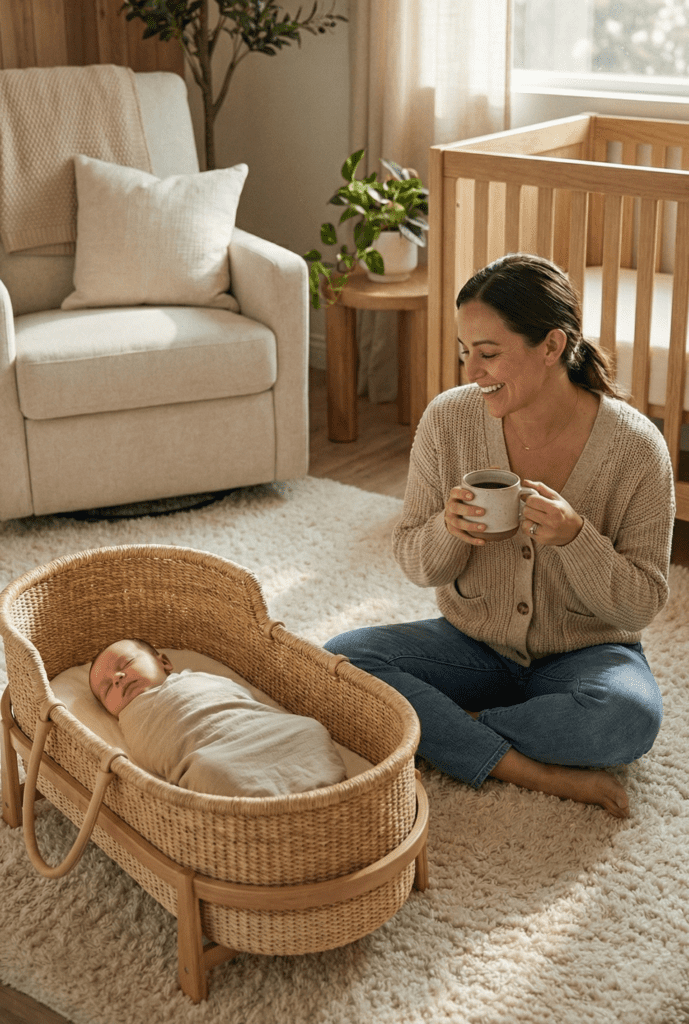
Here is the bottom line: Your baby will sleep eventually. (I promise. It might not feel like it right now, but they will). Whether they are snoozing in a high-tech bassinet, a hand-me-down crib, or a travel-ready Pack ‘n Play, the only thing that truly matters is that they are safe, flat on their back, and that you get to close your eyes for a few hours.
Don’t let the registry stress steal your joy. Pick the one that fits your bedroom size and your budget, and forget the rest.
Tell me in the comments: Are you Team Bassinet for the newborn days, or are you Team Straight-to-Crib? Let’s hear it!
Frequently Asked Questions (Safety & Logistics)
Can a newborn sleep in a Pack ‘n Play every night?
Yes! As long as the Pack ‘n Play meets current CPSC safety standards (which all new ones do), it is safe for nightly sleep. Ensure you are using the mattress pad provided by the manufacturer and a tight-fitting sheet.
Is a bassinet strictly necessary?
No. A bassinet is a convenience item, not a safety requirement. You can put a newborn directly into a crib or Pack ‘n Play from day one. However, most parents find bassinets significantly easier for nighttime care.
How long can a baby stay in a bassinet?
Typically until they reach the weight limit (usually 15-20 lbs) OR when they begin to show signs of rolling over or pushing up on hands and knees—whichever comes first. This usually happens around 3 to 5 months.
Is a mini crib better than a bassinet?
A mini crib is a great middle-ground! It has a smaller footprint than a standard crib but lasts longer than a bassinet (usually up to 1-2 years). If you are tight on space but want longevity, this is a solid choice.
Can I put a crib in my bedroom?
Absolutely. The American Academy of Pediatrics (AAP) recommends room-sharing (sleeping in the same room, but on a separate surface) for at least the first 6 months. If your bedroom is big enough for a full crib, go for it!
Are Pack ‘n Plays safe for newborns?
Yes, but safety is in the details. The mattress must be firm and flat. Do not add blankets, pillows, or “supplemental” mattresses to make it softer. If using the bassinet attachment, ensure it is clipped in securely according to the manual.
Do I need a separate mattress for a Pack ‘n Play?
NO. This is a huge safety no-no. Pack ‘n Plays are safety-tested only with the thin, hard mattress they come with. Adding a thick, soft aftermarket mattress creates a suffocation and entrapment risk. Do not do it.
What is the weight limit for a crib?
Standard cribs are incredibly sturdy and usually don’t have a strict “weight limit” in the same way bassinets do. They are designed to hold a child until they are ready to climb out (usually 35 inches tall), which covers toddlerhood (50+ lbs easily).
Can I skip the crib and use a Pack ‘n Play forever?
Technically, yes, until the child reaches the height or weight limit of the Pack ‘n Play (usually around 30 lbs or 35 inches). Most kids transition to a toddler bed around age 2-3, so you could potentially bridge the gap entirely with a Pack ‘n Play.
Which has the highest resale value?
Generally, high-end cribs (like Pottery Barn) or premium smart bassinets (like the SNOO) hold their value best. Standard Pack ‘n Plays are abundant and cheap, so they don’t resell for much.