
If you are reading this at 3 AM while staring at a sleeping baby, wondering if that gap in the crib looks a little too wide or if the mattress is too hard—you are not alone. I have been there.
As a new mom, my anxiety wasn’t about monsters under the bed; it was about the bed itself. But as an SEO professional with 15 years of experience analyzing data, I did what I do best: I researched. I didn’t just read the mommy blogs; I dug into the federal statutes, the forensic engineering reports, and the CPSC crib standards.
What I found is that modern baby crib safety standards aren’t just bureaucratic red tape. They are forensic engineering designed to prevent the two biggest nightmares of parenthood: entrapment and Sudden Infant Death Syndrome (SIDS).
[ALSO READ: The Ultimate Guide to Baby Cribs: How to Choose the Safe, Perfect Crib for Your Nursery (2026 Edition)]
The “Big Shift”: Why 2011 Changed Everything
If there is one date you need to memorize, it is June 28, 2011.
Before this date, the crib industry operated under “voluntary guidelines.” But the passage of the Consumer Product Safety Improvement Act (CPSIA) changed the game. It mandated that federal safety standards had to be “substantially the same as, or more stringent than” the voluntary ones.
Why Does This Matter?
If you are looking at a crib made before 2011, it is likely unsafe. The new crib safety regulations (16 CFR 1219) require rigorous testing that older cribs simply didn’t have to pass, including:
- Slat Strength Tests: Applying 80 lbs of force to ensure slats don’t snap.
- Hardware Fatigue: Zero tolerance for screws that loosen over time.
The Drop-Side Ban & The “V-Gap” Hazard
This is one of the most common questions I see: “I found a vintage crib with a drop-side. Is it safe?”
The answer is a hard no. The drop-side crib safety crisis wasn’t just about wobbly rails; it was about suffocation.
The “V-Gap” Explained
Drop-side cribs relied on plastic hardware that became brittle over time. When it broke, the rail would detach and tilt outward, creating a “V” shaped gap between the mattress and the rail. Infants rolled into this gap and couldn’t get out, leading to positional asphyxia (a cause of SUID).
So, are drop-side cribs illegal? Yes. It is illegal to sell or donate them. If you have one, the CPSC advises you to destroy it immediately.
Slat Spacing & Corners: The Anatomy of Airflow
You don’t need to be an engineer to check crib safety requirements, but you do need to know two specific numbers: 2-3/8 inches and 1/16 of an inch.
1. The 2-3/8 Inch Rule (And the Soda Can Test)
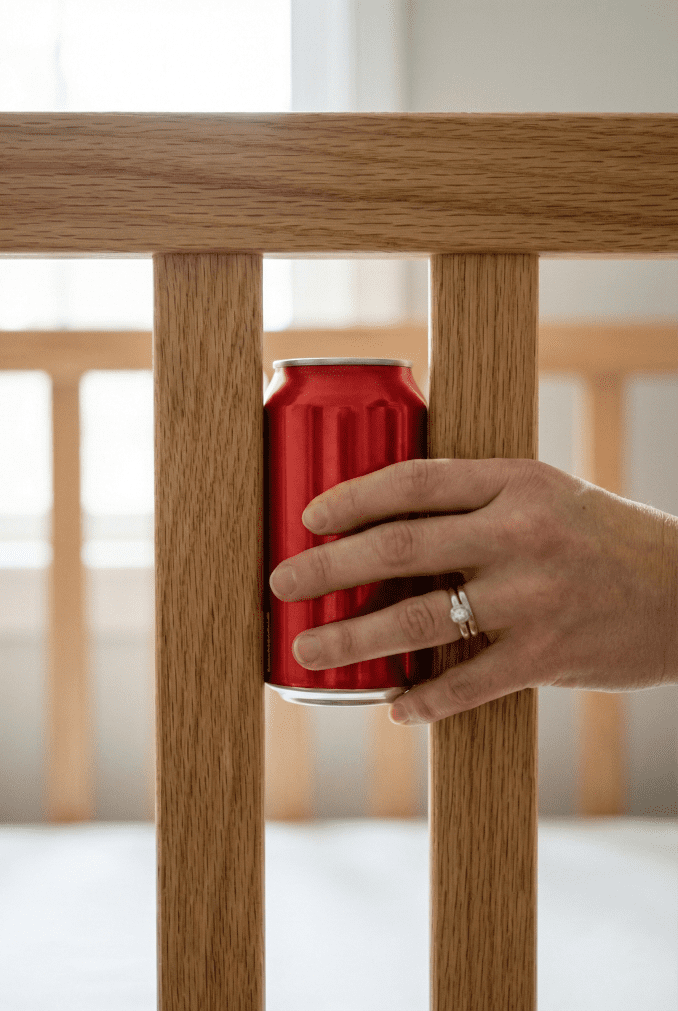
Federal law mandates that the distance between crib slats must be no more than 2-3/8 inches (about 60 mm).
Why this number? It comes down to anthropometry (body measurements). A baby’s body can pass through a gap wider than this, but their head cannot. If the body slides through but the head stays behind, it can restrict the airway.
The “Soda Can” Field Test: Don’t have a ruler? Grab a standard soda can (approx. 2.6 inches wide).
- If the can fits through the slats, the gap is unsafe.
- If the can gets stuck, the spacing is likely safe.
2. Corner Posts: The Snag Hazard
Run your hand along the corner posts. CPSC crib standards dictate they cannot extend more than 1/16 of an inch (1.5 mm). High posts are “catch points” where a toddler’s clothing can snag, posing a strangulation risk.
Mattress Safety: The First Line of Defense Against SIDS
We often think crib safety standards are just about the wood frame, but the mattress is actually your primary tool for SIDS prevention.
The Firmness Factor (It’s Not About Comfort)
If you press on a crib mattress and think, “Wow, this feels like a brick,”—good. Soft surfaces are a leading cause of SIDS due to Rebreathing. If a baby rolls onto their stomach on a soft mattress, the surface conforms to their face, trapping the air they exhale (CO2). When they breathe that CO2 back in, their oxygen levels drop.
A firm mattress (meeting ASTM F2933) prevents this.
[ALSO READ: When to Lower the Crib Mattress? A Safety Timeline by Age and Milestones]
The “Two-Finger” Test
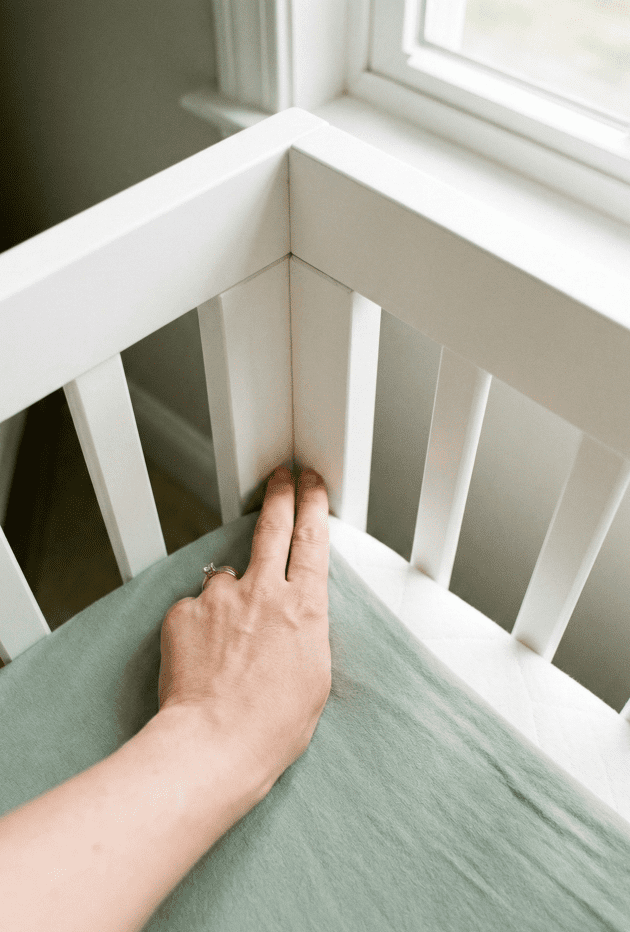
Gaps kill. To ensure your mattress fits the crib safety regulations:
- Push the mattress firmly to one corner.
- If you can fit more than two fingers between the mattress and the crib frame, the gap is dangerous.
“Bare is Best”: The Non-Negotiable SIDS Standard
You’ve seen the Pinterest photos of cribs filled with pillows and stuffed animals. As an SEO who sees the search data, I know people want these to be safe. But the data says otherwise.

The Safe Sleep for Babies Act
In 2022, this Act was signed into law, effectively banning padded crib bumpers and inclined sleepers.
- Bumpers: Limit fresh airflow and cause overheating (a SIDS risk factor).
- Blankets/Pillows: Suffocation hazards.
The safest crib is a boring crib: A firm mattress, a tight fitted sheet, and your baby. Nothing else.
Location Matters: The “3-Foot Rule” for Crib Placement
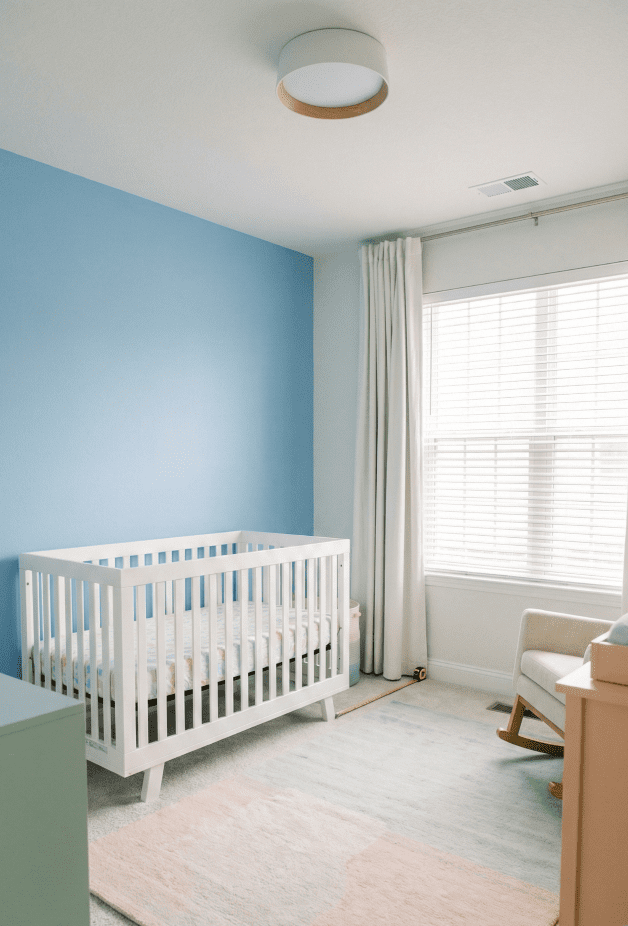
You’ve bought the certified crib. You’ve checked the slats. But where you put it is just as critical as what you bought. In the forensic safety world, we talk about the “Circle of Safety”—ensuring nothing within reach of the crib poses a threat.
The Golden Rule: Place the crib at least 3 feet away from:
- Windows & Blind Cords: This is the #1 hidden hazard. Dangling cords from blinds or curtains are a silent strangulation risk. Even if the window is closed, a toddler can pull themselves up and reach cords you thought were safe.
- Wall Art & Shelves: That heavy framed print looks cute above the crib, but if it falls during a nap (or a tiny earthquake), it’s a disaster. Pro-Tip: Use lightweight canvas or decals instead of heavy frames with glass.
- Baby Monitor Cords: Never mount a camera on the crib rail. Keep cords strictly 3 feet away.
Buying Used? The “10-Year Rule” & Recall Checks
I love a good thrift find, but when it comes to juvenile product safety, second-hand is risky.
[ALSO READ: Buying a Used Crib? How to Sanitize, Paint, and Safety-Check Second-Hand Gear]
The 10-Year Rule
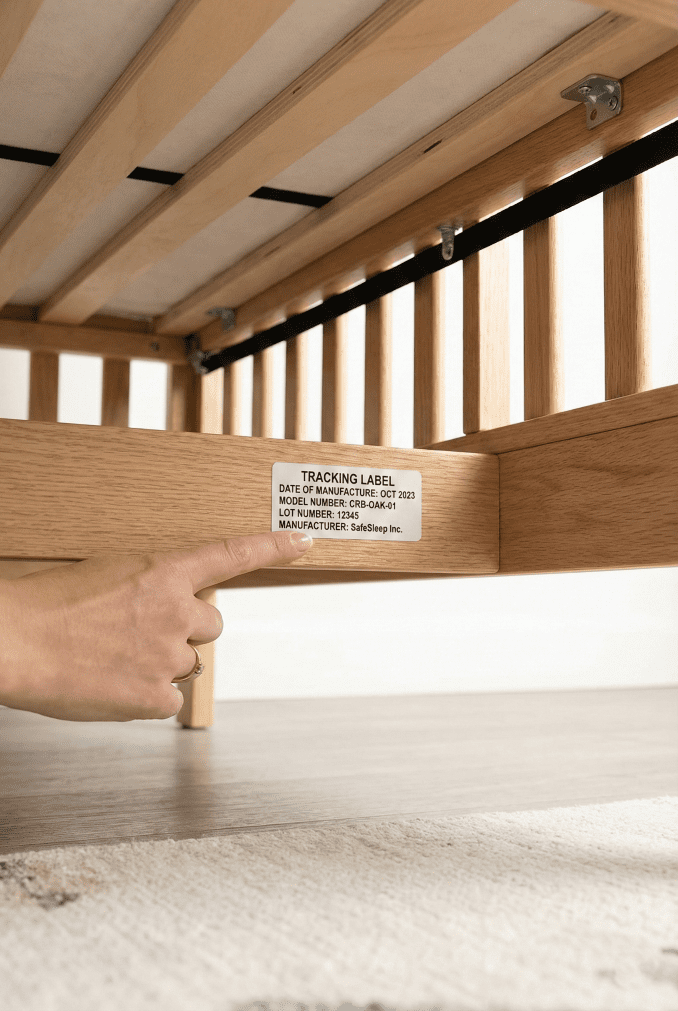
Wood glue dries out. Screws strip. A 15-year-old crib is structurally tired. Most experts recommend a strict 10-year expiration date on cribs.
How to Perform a Recall Check
- Find the tracking label (bottom of the headboard).
- Go to SaferProducts.gov.
- Search the Model Number.
- Red Flag: If the brand is “Simplicity,” destroy it. They went out of business due to massive safety failures.
Pro-Tip: The Step 90% of Parents Miss
Checking for recalls is good; getting notified automatically is better. Every new crib comes with a postage-paid Product Registration Card (usually attached to the mattress support). Do not throw this away. By law, manufacturers can only use this data to contact you in the event of a safety recall—not for marketing. If you lost the card, register online using the model number. It’s your personal safety alert system.
Your 60-Second Field Compliance Checklist
To achieve JPMA certification levels of peace of mind, run this quick check on any crib you are considering:
- [ ] The Date Check: Is the manufacture date after June 28, 2011?
- [ ] The Shake Test: Shake the crib. It should not wobble. Loose hardware is a fail.
- [ ] The Soda Can Test: Can a soda can pass through the slats? (It shouldn’t!)
- [ ] No Cutouts: Are the headboards solid? No decorative cutouts that could trap a head.
- [ ] Hardware: Are all screws original? Mismatched hardware store bolts are a major red flag.
Top 10 FAQs on Crib Safety & SIDS
Does a firm mattress actually prevent SIDS?
Yes. A firm surface prevents “rebreathing” (inhaling exhaled carbon dioxide) if the baby rolls over, which is a primary mechanism of SIDS.
Are “breathable” mesh bumpers safe?
The AAP (American Academy of Pediatrics) advises against all bumpers, including mesh ones. They can still become loose and pose a strangulation risk, and there is no evidence they prevent injury.
Can I use a crib from the 90s if I fix the hardware?
No. Cribs from the 90s likely have slats that are too wide (allowing head entrapment) and may contain lead paint. They do not meet the 2011 structural integrity laws.
How do I know if my crib is recalled?
Check the permanent label on the crib’s frame for the model number, then search it on the CPSC website (SaferProducts.gov).
What is the “Soda Can Test”?
It’s a quick field test. If a standard soda can fits through the slats of a crib, the slats are too far apart (wider than 2-3/8 inches) and the crib is unsafe.
Is it illegal to sell a drop-side crib?
Yes. It is illegal to sell, manufacture, or donate drop-side cribs in the US due to the high risk of entrapment and death.
Why are cribs with cutouts in the headboard dangerous?
Decorative cutouts can trap a baby’s head or limbs. Modern standards prohibit these designs to prevent entrapment.
Can I add a mattress topper to make the crib softer?
Absolutely not. Soft bedding is a major suffocation and SIDS hazard. The mattress should be firm and keep its shape.
Do cribs expire?
While there is no printed “expiration date,” safety experts and manufacturers recommend replacing cribs after 10 years due to wood and hardware degradation.
Does a fan in the room help with safety?
Yes! Studies suggest that having a fan circulating air in the nursery can reduce the risk of SIDS by up to 72% by preventing carbon dioxide from pooling around the baby’s face.
Conclusion: Trust the Engineering
We can’t control everything as parents. We can’t control the teething nights or the sleep regressions. But we can control the environment our babies sleep in.
By adhering to these crib safety standards, you aren’t just following rules; you are trusting the science that keeps your baby breathing safely. So check that label, toss the bumpers, do the soda can test, and then—hopefully—get some sleep yourself.
Need help setting up your safe nursery?
[ALSO READ: 15 Aesthetic Nursery Layouts for Small Rooms (Centered Around Your Crib)]